
Kitchen Cabinet Trends for New Jersey Homes in 2026: What's In, What's Out
The top kitchen cabinet trends for New Jersey homes in 2026 are: warm white and cream Shaker cabinets replacing all-white, natural wood tones (white oak, walnut) making a strong comeback, two-tone cabinet designs with contrasting islands, and slab-front doors gaining ground in contemporary NJ homes. What’s fading fast: all-white Shaker kitchens with cold undertones, full farmhouse aesthetics with shiplap and distressed details, overly fluted cabinet fronts on every surface, and matte black hardware used as the only metallic in a kitchen.
If you are planning a kitchen remodel in New Jersey in 2026, the cabinet choices you make today will shape how your kitchen looks and sells for the next 15 to 20 years. Picking the wrong trend is easy. Plenty of NJ homeowners installed all-white Shaker kitchens between 2018 and 2022 that already feel dated.
This guide covers what is actually gaining ground in Central NJ kitchens right now, what is on the way out, and how to make decisions that hold up for resale in Middlesex and Monmouth counties. The trend data comes from real showroom activity at HM Cabinetry’s East Brunswick, Howell, and Freehold locations, backed by national design research and NJ real estate listing data.
The goal is not to chase trends. It is to understand what is current so you can make a choice that is fresh now and not embarrassing in 2031.
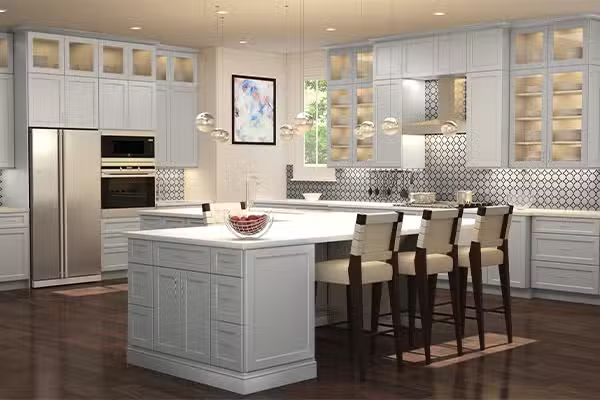
The 2026 NJ Cabinet Trend at a Glance
Before getting into each trend individually, here is the full picture in one place. Use this table as your fast reference when comparing options at a showroom.
| Trend | What It Means for NJ Homes | Status |
|---|---|---|
| Warm White / Cream Shaker | Replacing cold white. Warmer undertones read as both fresh and timeless. | IN - Strong |
| Natural Wood (White Oak, Walnut) | The biggest shift in 2026. Warm, organic, pairs with quartz and brass. | IN - Very Strong |
| Two-Tone Cabinets | Contrasting island or lowers vs uppers. Now a standard design approach, not a risk. | IN - Strong |
| Slab / Flat Panel Doors | Growing fast in contemporary NJ builds. Clean, easy to clean, modern. | IN - Growing |
| Sage Green / Olive Cabinets | Earthy green as a neutral. Works best on islands or lowers in NJ colonials. | IN - Growing |
| Navy Blue Cabinets | Proven performer in NJ, especially for islands and shore-area homes. | IN - Steady |
| Ceiling-Height / Floor-to-Ceiling Cabinets | Maximizes vertical space. Growing in new NJ construction and renovations. | IN - Growing |
| Thin-Rail Shaker (Modern Shaker) | Slimmer stiles and rails for a more refined, contemporary Shaker profile. | IN - Growing |
| All-White Cold Shaker Kitchens | The COVID-era wave is over. Cold white reads dated now in NJ's resale market. | OUT - Fading |
| Full Farmhouse Aesthetic | Shiplap, barn doors, distressed finishes. Oversaturated. Losing value in NJ listings. | OUT - Fading |
| Excessive Fluted Fronts | Fluted everything (cabinets, hoods, islands) has peaked and is already overdone. | OUT - Peaked |
| Matte Black Hardware Only | Still viable in small doses. As the only metal finish in a kitchen, it is fading fast. | OUT - Overused |
| Monochromatic Gray Kitchens | The cool gray wave from 2015–2020. Looking dated quickly in Middlesex County listings. | OUT - Dated |
| Full-Wall Open Shelving | Impractical and visually demanding. NJ families are returning to enclosed storage. | OUT - Retreating |
| Ornate Raised Panel Doors | Heavy traditional profile. Being replaced by cleaner Shaker and slab options. | OUT - Fading |
What's In: The 2026 Kitchen Cabinet Trends Worth Acting On
Trend 1: Warm White and Cream Shaker Cabinets
Verdict: IN and here to stay
The all-white kitchen is not dead, but the cold, stark white version is. NJ homeowners in 2026 are choosing white with warm, creamy undertones rather than bright, blue-adjacent whites. The difference is subtle in a showroom under fluorescent light. It is obvious in your actual kitchen under natural NJ light conditions.
Warm white has replaced cold white as the top-selling cabinet finish at HM Cabinetry’s Central NJ showrooms. Shades described as off-white, antique white, linen, cream, and warm white all fall into this category. They share an undertone that reads as slightly yellow, beige, or grey-green rather than the stark blue-white of pure white.
Why it matters for your NJ kitchen: NJ homes built between 1960 and 1990, the dominant housing stock in East Brunswick, Howell, and Freehold, have kitchen windows that are typically north or east-facing. Cold white cabinets in these conditions look harsh and clinical. Warm white reads cleaner, warmer, and more intentional.
The Shaker door profile is still the right choice to pair with warm white in most Central NJ homes. It is the most universally appealing cabinet style for NJ resale value. What has changed is the version of Shaker that sells. The 2026 Shaker has slightly thinner stiles and rails than the traditional profile, giving it a more refined look without losing the versatile appeal.
HM Cabinetry brands that carry warm white Shaker in stock:
⦁ Fabuwood Cabinetry: Allure Fusion Dove White, Nexus Frost. Both warm-toned, high-quality plywood boxes.
⦁ Designer’s Choice: Available in multiple warm white finishes across Shaker door profiles.
⦁ J&K Cabinetry: J8 and S8 series in white and off-white finishes with modern Shaker profiles.
⦁ Forevermark: Pepper Shaker White and Ice White Shaker, both with warm undertones.
Trend 2: Natural Wood Tones (White Oak and Walnut)
Verdict: IN and the biggest single shift in 2026
Natural wood cabinetry now holds approximately 29% market share in new kitchen installations nationally, up from under 15% three years ago. In NJ, the shift is most visible in new construction in Monmouth County and renovations of contemporary or open-plan homes in South Brunswick and Monroe. White oak leads, walnut is the premium choice.
This is not the knotty pine and honey oak of the 1990s. The 2026 version of wood-tone cabinetry uses refined grain patterns, consistent staining, and contemporary profiles. Rift-cut and quarter-sawn white oak provide a linear grain that reads modern rather than rustic. Walnut in a medium or dark stain adds depth and luxury without looking like a hunting lodge.
Why it is trending specifically in NJ: NJ’s resale market in 2026 is responding to wood-tone kitchens positively. Real estate listing language across Middlesex and Monmouth County MLS data shows ‘natural wood cabinetry’ and ‘white oak cabinets’ appearing alongside premium listing prices. Buyers are responding to warmth.
The practical challenge for NJ homeowners: wood-tone cabinets require more maintenance attention than painted cabinets. Spills and humidity affect wood finishes differently than painted MDF or plywood. Specifying a quality protective finish and understanding the maintenance requirements before purchasing is important, particularly in NJ kitchens with high summer humidity.
How natural wood works in different NJ home types:
⦁ Colonial homes (Middlesex County standard): Use wood tones on the island or lower cabinets. Keep uppers in warm white for balance. The contrast is the 2026 sweet spot.
⦁ Ranch homes (common in Howell, Freehold): All-wood lower run with quartz countertop is particularly strong in ranch galley kitchens where the ceiling is lower and painted uppers can feel heavy.
⦁ Contemporary new construction (South Brunswick, Monroe, Marlboro): Full white oak kitchen, slab door profile, integrated hardware. The most forward-looking option in NJ right now.
⦁ Cape cod and shore-adjacent homes: Light-stained natural wood brings the relaxed warmth that suits these homes without the farmhouse aesthetic that has become overdone.
Trend 3: Two-Tone Cabinets
Verdict: IN and now a standard approach, not a bold risk
Two-tone kitchens have moved past ‘trend’ into standard practice. In 2026 Central NJ showrooms, more than half of homeowners planning a new kitchen are asking about two-tone configurations before they have even decided on a single color. The question has shifted from ‘should I do two-tone’ to ‘which two-tone combination works for my kitchen’.
The most common two-tone approaches in NJ kitchens in 2026:
| Two-Tone Approach | How It Works in NJ Homes |
|---|---|
| White uppers, navy or forest green lowers | The most requested combination in Central NJ. Works in both colonial and ranch layouts. Grounds the kitchen without making it feel dark. The navy lower with white upper combination appears consistently in Monmouth County listings described as "updated kitchen." |
| Painted perimeter with natural wood island | The second most popular. All painted Shaker perimeter (warm white or sage green) with a white oak or walnut island. This gives you both the warmth of wood and the clean practicality of painted cabinets where spills are most likely. |
| Warm white uppers, wood-tone lowers | Growing fast. Natural wood base cabinets with white or cream uppers. Very strong in open-plan kitchens where the lower cabinets are visible from the living area and the warmth of wood becomes a design feature. |
| Same color, different finish (matte vs satin) | Subtle and sophisticated. Same paint color on both upper and lower but different finish. Perimeter in matte, island in satin. Not widely visible in NJ yet but growing in North and Central NJ contemporary builds. |
What to avoid in two-tone: the crisp white-on-top, sharp-contrast wood-on-bottom combination that dominated 2020-2023. It reads predictable now. The 2026 version uses softer contrasts and more organic pairings rather than the high-contrast showroom formula.
Trend 4: Slab (Flat Panel) Doors
Verdict: IN for contemporary and new construction, not universal
Slab doors are gaining ground fast but they are not the right choice for every NJ home. They work best in contemporary new construction, condos, and open-plan kitchens. They look out of place in a traditional colonial in East Brunswick or a cape cod in Freehold. Know your home before you decide
A slab door is completely flat with no frame, panel, or profile detail. Every visual element in a slab-door kitchen comes from the material, the color, and the hardware. There is nowhere to hide, which is why quality matters more with slab doors than with Shaker.
Slab doors are easier to clean than Shaker, which matters for NJ families with kids. No groove at the panel edge means no grease accumulation. This practical advantage is driving adoption even in homes where the architecture is not strictly modern.
The slab door trend in Central NJ is concentrated in: new developments in South Brunswick and Monroe, condo and townhome renovations in Edison and Piscataway, and additions to existing homes where a new kitchen section is opened up to a living area in a contemporary way.
This is not the knotty pine and honey oak of the 1990s. The 2026 version of wood-tone cabinetry uses refined grain patterns, consistent staining, and contemporary profiles. Rift-cut and quarter-sawn white oak provide a linear grain that reads modern rather than rustic. Walnut in a medium or dark stain adds depth and luxury without looking like a hunting lodge.
Why it is trending specifically in NJ: NJ’s resale market in 2026 is responding to wood-tone kitchens positively. Real estate listing language across Middlesex and Monmouth County MLS data shows ‘natural wood cabinetry’ and ‘white oak cabinets’ appearing alongside premium listing prices. Buyers are responding to warmth.
The practical challenge for NJ homeowners: wood-tone cabinets require more maintenance attention than painted cabinets. Spills and humidity affect wood finishes differently than painted MDF or plywood. Specifying a quality protective finish and understanding the maintenance requirements before purchasing is important, particularly in NJ kitchens with high summer humidity.
Slab vs Shaker: quick decision guide for NJ homeowners
⦁ Your home is a traditional colonial or cape cod built before 2000: stick with Shaker. Slab will feel out of place.
⦁ Your home is new construction or has been significantly opened up with an open-plan layout: slab is worth considering.
⦁ You care about resale in the next 5 years: Shaker still has broader buyer appeal in NJ. Slab is directional, not universal.
⦁ You want maximum ease of cleaning and a modern, furniture-like look: slab is the right choice
Trend 5: Earthy Colors (Sage Green, Olive, Greige)
Verdict: IN and growing as a replacement for gray
Earthy greens and warm neutral tones are replacing the cool gray wave that dominated NJ kitchens from 2015 to 2021. Sage green is the most requested accent color at HM Cabinetry’s showrooms in 2026. Olive and forest green are the bolder alternatives. Greige (gray-beige) is the most practical neutral shift for homeowners who want to move away from gray without committing to a color.
Sage green in a Central NJ kitchen: it reads warm, organic, and current without the risk of the deep navy or forest green that some homeowners find too bold. It pairs naturally with brass and brushed gold hardware, with quartz countertops in white or cream tones, and with warm white or wood-tone uppers.
Where it works in NJ homes: best applied to the island, the lower cabinets, or a single accent wall of cabinets in a U-shaped or L-shaped kitchen. A full-kitchen sage green can feel heavy in smaller kitchens common in older East Brunswick and Freehold colonials. Use it as the accent, not the base.
Atlas Homewares, based in Branchburg NJ, reported in their end-of-2025 design trends analysis that earthy greens and muted blues are the top color choices replacing gray across kitchen installations they supply hardware for. This is particularly relevant because Atlas supplies NJ showrooms directly, making their data a real indicator of what NJ homeowners are ordering, not just what designers are recommending in national publications.
Trend 6: Hardware as a Design Statement (Brass, Brushed Gold, Mixed Metals)
Verdict: IN - warmer metallics replacing single-finish matte black
Matte black had a long run. It is not wrong in 2026, but using it as the only metal finish across handles, faucet, pendant lights, and appliances looks formulaic now. The 2026 approach mixes warmer metallics, uses hardware as jewelry rather than a background element, and prioritizes brass, brushed gold, champagne bronze, and brushed nickel over flat matte black.
Hardware gets a disproportionate amount of visual attention for its cost. Changing hardware is the lowest-cost way to update the feel of a kitchen without replacing cabinets. This makes the hardware trend particularly relevant for NJ homeowners who are updating rather than fully renovating.
In 2026 Central NJ showrooms, the most requested hardware finishes are: brushed gold on warm white cabinets, champagne bronze on natural wood or greige, and mixed matte black with brushed nickel in transitional kitchens. The trend is toward intentional mixing rather than strict matching.
One firm rule: avoid gold-colored hardware that reads as yellow gold. The 2026 brass and gold finishes are warm-toned but muted, closer to antique brass or brushed champagne than the shiny gold of the 1980s.
Trend 7: Floor-to-Ceiling Cabinetry
Verdict: IN and growing, especially in NJ renovations
Running cabinets all the way to the ceiling is gaining adoption in NJ renovations for two practical reasons: it maximizes storage in kitchens that are often undersized in older Central NJ homes, and it creates a built-in, custom look that real estate listings consistently describe as a premium feature.
Older NJ colonials and ranches built between the 1960s and 1980s typically have 8-foot ceilings with upper cabinets that stop 12 to 18 inches below the ceiling, leaving a dust-collecting ledge above. Floor-to-ceiling cabinets eliminate that gap and add significant storage capacity in kitchens where the footprint cannot be expanded.
The practical consideration: homes with 8-foot ceilings can run cabinets to the ceiling with standard upper cabinet heights. Homes with 9 or 10-foot ceilings may need stacked cabinets or custom-height uppers. This is something to confirm with a design team before ordering, as the cost of stacked or custom uppers is higher than standard sizing.
At HM Cabinetry’s showrooms, the design team can show you both the standard upper cabinet height and the ceiling-height option side by side and give you an accurate cost comparison for your specific kitchen dimensions.
What's Out: 2026 Cabinet Trends Fading in NJ Kitchens
Knowing what to avoid is just as important as knowing what is current. These are the cabinet choices that are losing their appeal specifically in the NJ resale market and that are generating ‘dated’ comments from buyers and real estate agents in Middlesex and Monmouth county listings.
All-White Cold Shaker Cabinets
Verdict: OUT - the most rapidly aging look in NJ kitchens
Design professionals surveyed for multiple 2026 trend reports cited all-white kitchens as the single fastest-aging trend right now. One designer described it directly: ‘As we emerged from the COVID era, everyone went crazy over cold white Shaker cabinets. Now they look dated.’ NJ real estate agents are seeing the same response from buyers in Middlesex County listings
To be clear: white cabinets are not out. Warm white and cream are strong performers in 2026. What is out is the specific combination of cold, bright white with a blue undertone, paired with white subway tile and stainless everything. That package was everywhere from 2018 to 2022 and now reads as a specific era of design rather than a timeless choice.
If you already have a cold-white kitchen: do not panic. Hardware and backsplash updates can shift the feeling significantly without a full cabinet replacement. Moving from matte black to brushed brass hardware and from white subway tile to a warmer ceramic or zellige tile can modernize the look considerably.
Full Farmhouse Aesthetic
Verdict: OUT - oversaturated in NJ and nationally
The modern farmhouse look peaked around 2019 to 2021. Shiplap, barn doors, apron-front sinks, open floating shelves in reclaimed wood, and distressed cabinet finishes formed a package that was everywhere for several years. It is now one of the most commonly cited ‘looks dated’ descriptions in NJ home listings.
This does not mean natural materials and warmth are out. The distinction is between a full farmhouse theme versus organic materials used with restraint. An apron-front sink still works. A natural wood island still works. What reads dated is the combination of all farmhouse signals at once, which creates a themed feel rather than a designed feel.
For Central NJ homeowners: the colonial homes that dominate Middlesex County were never architecturally suited to full farmhouse aesthetics anyway. The farmhouse trend worked best in true rural settings and modern new construction with high ceilings. In a 1970s colonial in Howell or East Brunswick, farmhouse elements often looked applied rather than organic.
Excessive Fluted Cabinet Fronts
Verdict: OUT - peaked and already overdone
Fluted cabinetry had a genuine moment. The texture added depth and handcrafted character to otherwise flat surfaces. The problem is what happens when a trend gets applied to every surface. Fluted cabinet fronts on every door, fluted range hood, fluted island panels, fluted open shelving. Design professionals in 2026 reports are consistently describing ‘fluted wood everything’ as the trend that has peaked and now reads as try-hard.
If you like the texture that fluting provides: use it selectively. A single run of fluted drawer fronts on the island. A fluted panel on the range hood. One accent section. The principle is that texture should be a detail, not the concept of the kitchen.
Monochromatic Cool Gray Kitchens
Verdict: OUT - the 2015-2020 look is aging fast
Cool gray cabinets had an extended run in NJ. They were the transition out of all-white that felt safe and neutral. The problem is that cool gray with cool gray countertops and cool gray tile creates a kitchen that feels cold in person despite looking stylish in photos. In NJ’s housing market, kitchens that feel cold or clinical are getting buyer comments.
Gray is not out entirely. Warm gray, greige (gray-beige), and charcoal used selectively on islands or lower cabinets are still valid. What is out is the full monochromatic cool gray kitchen where every surface shares the same undertone. It reads as a specific era, roughly 2015 to 2021, the same way brass hardware read as the 1980s.
Monochromatic Cool Gray Kitchens
Verdict: OUT - the 2015-2020 look is aging fast
Cool gray cabinets had an extended run in NJ. They were the transition out of all-white that felt safe and neutral. The problem is that cool gray with cool gray countertops and cool gray tile creates a kitchen that feels cold in person despite looking stylish in photos. In NJ’s housing market, kitchens that feel cold or clinical are getting buyer comments.
Gray is not out entirely. Warm gray, greige (gray-beige), and charcoal used selectively on islands or lower cabinets are still valid. What is out is the full monochromatic cool gray kitchen where every surface shares the same undertone. It reads as a specific era, roughly 2015 to 2021, the same way brass hardware read as the 1980s.
Full-Wall Open Shelving
Verdict: OUT - retreating fast as practicality wins
Open shelving looked beautiful in 2018 and 2019 kitchen photoshoots. NJ homeowners who installed full walls of open shelving have spent the years since dusting dishes, reorganizing display items after every use, and hiding things that do not look good on open shelves. The practical costs have caught up with the aesthetic appeal.
A single open shelf for display in an otherwise enclosed kitchen: still fine and often good design. Full-wall open shelving as the primary storage solution in a working family kitchen: retreating quickly in NJ. The 2026 trend is toward one or two curated open elements within mostly enclosed cabinetry.
Matte Black as the Only Hardware Finish
Verdict: OUT as a single finish, still valid in mixed use
Matte black hardware had a strong run from roughly 2019 to 2023. It is not wrong in 2026 when used strategically, but as the single hardware finish across every knob, pull, faucet, and light fixture in a kitchen, it is being described by NJ designers as overdone. The warmer metallic finishes (brass, champagne bronze, brushed nickel) are replacing it as the dominant choice.
The correct 2026 approach to matte black: use it as one element in a mixed-metal scheme rather than as the foundation. A matte black faucet with brushed gold pulls. Matte black pendant lights with champagne bronze cabinet hardware. The mixing reads more intentional than the all-black hardware formula.
The NJ Resale Factor: Which Trends Hold Value
Not every design choice should be made for resale. If you plan to stay in your Central NJ home for 20 years, personal preference matters more than market trends. But if you are remodeling with eventual sale in mind, the NJ resale market has clear preferences that differ from national trend reporting.
| Resale Category | NJ Market Reality in 2026 |
|---|---|
| Best for NJ resale value | Warm white Shaker cabinets remain the most broadly appealing choice for Middlesex and Monmouth county buyers. Natural wood tones are gaining resale traction but are not yet as universally appealing as white. Two-tone with white uppers and a contrasting island is consistently described positively in NJ listing language. |
| Moderate resale impact | Sage green and earthy tones are appreciated by a growing buyer segment in NJ but not universal. Slab doors test well in younger buyer demographics in NJ but less well with traditional colonial-home buyers. Floor-to-ceiling cabinetry is a consistent positive in listing descriptions. |
| Lower resale impact or risk | All-white cold Shaker is now generating dating comments. Full farmhouse aesthetics are being mentioned negatively in buyer feedback for NJ homes built before 2005. Monochromatic gray is the choice most likely to feel dated at resale within 5 years. |
The one consistent principle across NJ resale data: warm always beats cold. Warm white beats cold white. Warm gray (greige) beats cool gray. Warm wood tones beat cold metal-influenced finishes. NJ buyers in 2026 respond to kitchens that feel like places to live in, not showrooms that have been staged.
Pairing Trends: What Works Together in 2026 NJ Kitchens?
Individual trends are useful, but the real skill in kitchen design is knowing which elements work together. These are the combinations that are getting the strongest responses in Central NJ showrooms and listings in 2026.
| Combination | How and Where It Works in NJ |
|---|---|
| Warm white Shaker + quartz countertop in soft white + brushed brass pulls | The 2026 NJ classic. Safe for resale, current without being trendy, works in colonial and ranch. The warm undertones across all three elements create a cohesive kitchen without any single element competing for attention. |
| White oak or walnut island + warm white Shaker perimeter + sage green accent | The boldest combination that still works at resale. The wood island becomes the focal point, the warm white perimeter is universally appealing, and the sage green accent on a pantry wall or built-in adds current color without overcommitting. |
| Navy lower Shaker + white upper Shaker + white quartz + champagne bronze hardware | Strong in NJ colonial homes. The navy grounds the kitchen, the white opens it up, and the champagne bronze adds warmth to what could otherwise feel cold. Consistently appearing in NJ MLS listings described as 'updated' with premium pricing. |
| Slab door in warm wood tone + integrated handleless hardware + thin white quartz | The contemporary NJ kitchen for new builds. No visible hardware breaks the clean line of the slab door. Natural wood tone adds warmth to an otherwise minimal design. Works in South Brunswick and Monroe new construction where contemporary styles are most common. |
Making Smart Cabinet Choices for Your NJ Home in 2026
The best kitchen remodel is one that is current without being trendy, personal without being risky, and designed for your actual life rather than a magazine photo shoot. In Central NJ, that means warm and versatile rather than cold and minimal. It means materials that hold up to NJ humidity and busy family kitchens. It means choices that make real estate agents describe your kitchen as ‘updated’ rather than ‘dated’ when you eventually sell.
The specific trends to act on in 2026: warm white or cream Shaker as the foundation, natural wood for warmth and character, two-tone configurations for visual interest, and warmer metallic hardware that adds personality without commitment. Avoid the cold, cold-white, cold-gray, all-farmhouse, all-matte-black formulas that now date a kitchen in NJ buyer conversations.
HM Cabinetry’s showrooms in East Brunswick, Howell, and Freehold carry the brands and finishes that represent every 2026 trend discussed in this guide. The design team can show you what each combination actually looks like in a working kitchen display, under real light, at full scale. Walk-ins are welcome at all three locations. If you want to plan a specific design session, book online or call (732) 579-7905.
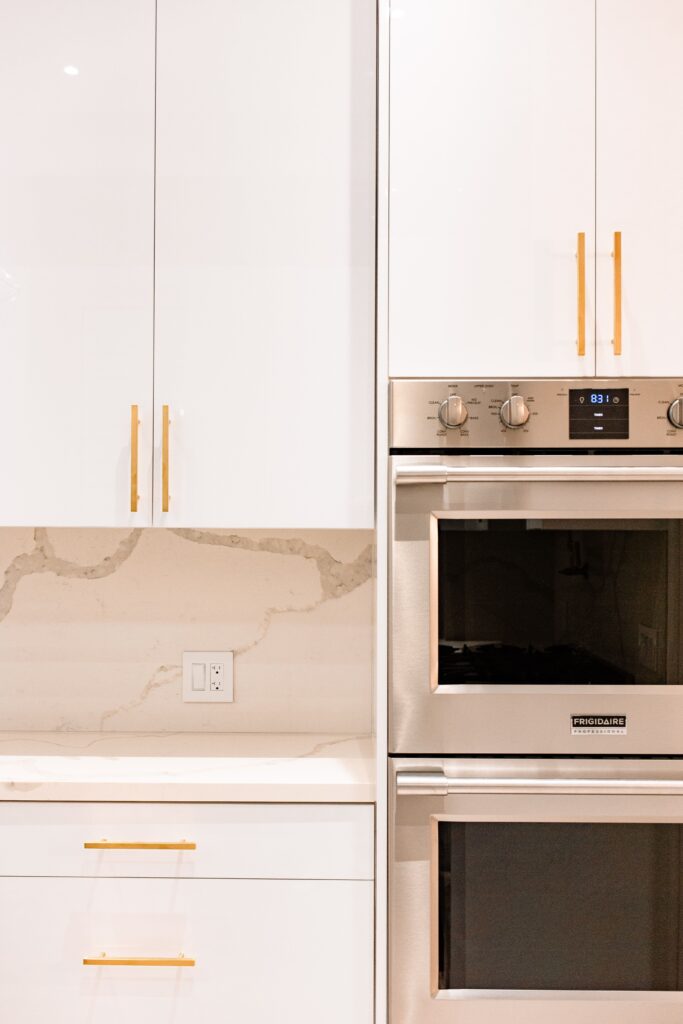
See 2026 NJ Cabinet Trends In-Person
Working displays. 15+ brands. Free 3D design. Central NJ.
East Brunswick (Route 18) | Howell (Route 9) | Freehold (Route 9)
Mon-Sat 10am-6pm | Sun 11am-4pm | (732) 579-7905
Frequently Asked Questions
What kitchen cabinet color is most popular in New Jersey in 2026?
Warm white and cream Shaker cabinets are the most popular cabinet color in New Jersey in 2026, replacing the cold, bright white that dominated from 2018 to 2022. Natural wood tones, specifically white oak and walnut, are the fastest-growing alternative. Two-tone configurations with white uppers and a contrasting navy, sage green, or wood-tone lower are the most requested design approach at NJ showrooms. At HM Cabinetry’s Central NJ showrooms in East Brunswick, Howell, and Freehold, warm white accounts for the majority of cabinet orders in 2026, with natural wood a growing second.
Are white kitchen cabinets still popular in 2026?
White cabinets remain popular in 2026, but the specific type of white matters. Warm white, off-white, cream, and linen tones are strong performers and good choices for NJ resale value. Cold, bright white with blue undertones is fading and beginning to read as dated in NJ listings. If you are choosing white for a NJ kitchen remodel, bring samples into your actual kitchen and check them in natural light before ordering. What looks white in a showroom under artificial light can read blue, gray, or yellow in your specific home.
What cabinet style is trending in 2026?
The modern or refined Shaker door is the dominant trend in 2026, featuring slightly thinner stiles and rails than the traditional Shaker profile. Slab or flat-panel doors are the fastest-growing alternative, particularly in contemporary NJ homes and new construction. Ornate raised panel doors with heavy molding profiles are clearly fading. Two-tone configurations, which use different colors or finishes for the island versus perimeter cabinets, or upper versus lower cabinets, are now a standard design approach rather than a bold risk.
What kitchen cabinet trends are going out of style in 2026?
The cabinet trends fading fastest in 2026 are: cold all-white kitchens with blue-undertoned whites, full farmhouse aesthetics with shiplap and distressed finishes, monochromatic cool gray kitchens, full-wall open shelving as the primary storage approach, excessive fluted surfaces applied to every cabinet, and matte black used as the only hardware finish. NJ homeowners planning a remodel should also avoid high-gloss painted cabinet finishes, which show every fingerprint and nick, and ornate raised panel doors with heavy traditional profiling.
Are natural wood kitchen cabinets a good choice for NJ homes in 2026?
Yes. Natural wood cabinets, particularly white oak and walnut, are one of the strongest trends in 2026 and are performing well in the NJ resale market in Middlesex and Monmouth counties. They add warmth and character that painted cabinets cannot replicate. The important considerations for NJ specifically: wood cabinets require a quality protective finish to handle NJ’s humid summers, and plywood box construction is strongly recommended over particle board to prevent swelling in high-humidity conditions near sinks and dishwashers. HM Cabinetry’s solid wood cabinet category includes options across multiple wood species and finish levels.
What hardware is trending for kitchen cabinets in 2026?
Warmer metallic finishes are the 2026 hardware trend, specifically brushed brass, champagne bronze, brushed gold, and brushed nickel. These are replacing the all-matte-black hardware that dominated from 2019 to 2023. Mixed metal approaches, using two complementary finishes rather than a single finish throughout, are growing. Matte black is still valid when used as one element in a mixed scheme. The hardware finishes to avoid in 2026 are: bright polished brass (reads as 1980s), chrome in traditional kitchens (dated), and all-matte-black as the only finish (overused and fading).
What kitchen cabinet trends work best in a NJ colonial home?
For NJ colonial homes, which represent the dominant housing stock in East Brunswick, Howell, Freehold, and surrounding Middlesex and Monmouth County towns, the best 2026 cabinet choices are: warm white or cream Shaker doors (refined modern Shaker profile with slightly thinner stiles), natural wood island contrasting with painted perimeter, two-tone with navy or sage green lowers and white uppers, and brushed brass or champagne bronze hardware. Avoid full slab doors on colonials, which can look out of place architecturally. Avoid full farmhouse aesthetics, which were never well-matched to colonial architecture.
How do 2026 kitchen cabinet trends affect home resale value in New Jersey?
NJ real estate data from Middlesex and Monmouth county MLS listings in 2026 shows that kitchens with warm white or cream Shaker cabinets, quartz countertops, and updated hardware are consistently described positively and command premium pricing. Natural wood tones are gaining buyer appreciation. Cold white kitchens, monochromatic gray, and full farmhouse aesthetics are beginning to generate ‘dated’ buyer responses. The NJ principle that holds across all trend data: warm reads better than cold, and organic materials (wood, natural stone) read better than industrial or highly glossy finishes. Plan any NJ kitchen remodel with a 10 to 15-year horizon, and prioritize warmth and versatility over trend-chasing.